 Republic of Tunisia
Activities and Responsibilities
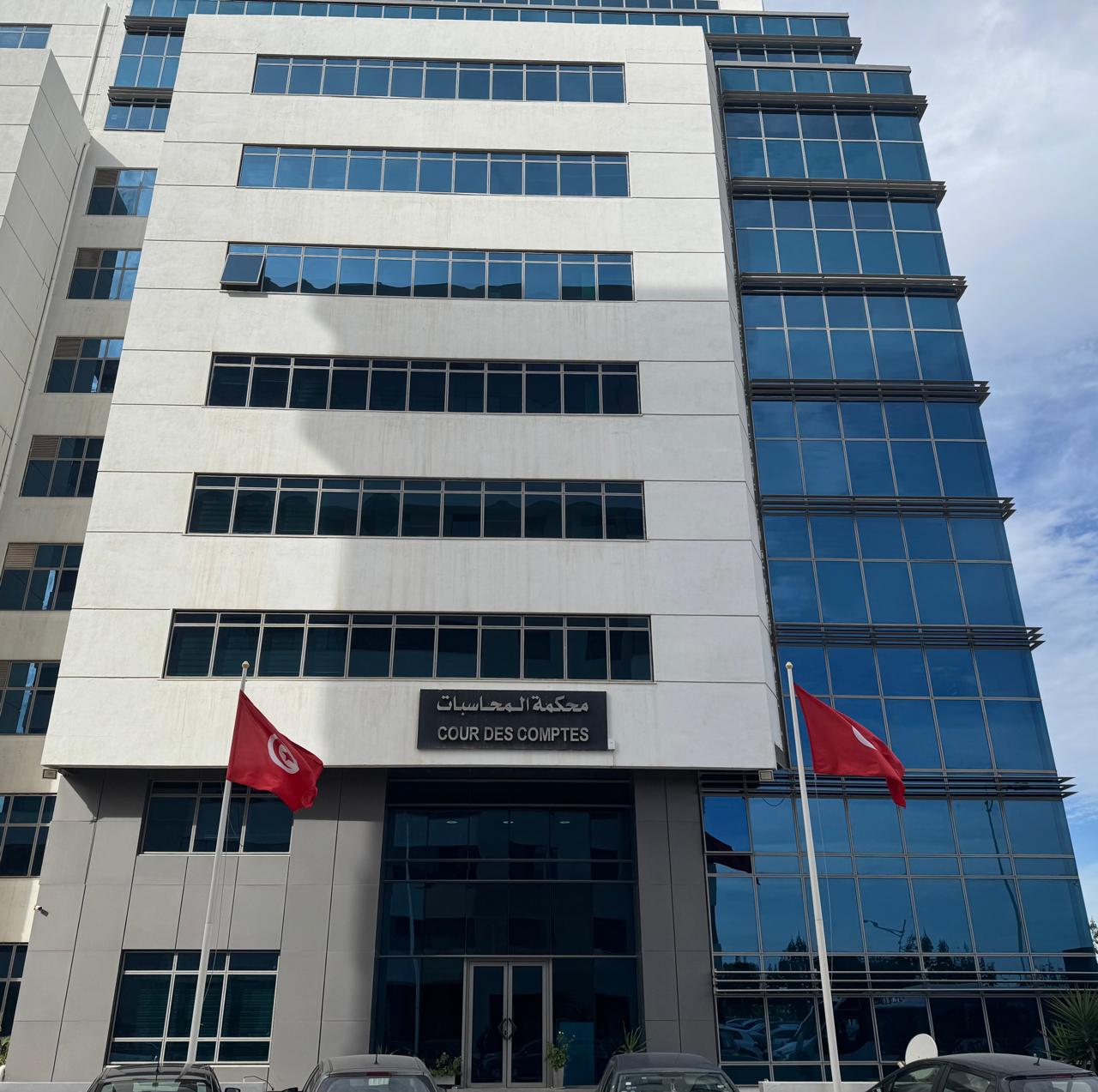
With both judicial and audit powers, the Court of Accounts delivers judgments and prepares reports in accordance with the principles of legality, effectiveness, transparency, accountability and integrity, under Article 2 of Organic Law No. 2019-41 of 30 April 2019 concerning the Court of Accounts. This Law confirmed the Court’s vision and position and extended its powers, particularly its judicial responsibilities. The composition of the Court’s formations and its procedures were revised to meet the requirements of effectiveness and the guarantees of a fair trial. The Court of Accounts thus has a broader scope of intervention.
Under the provisions governing it, the Court of Accounts:
- Judges the accounts of public accountants, rules on cases of de facto management, may decide appeals seeking amendment of administrative decisions on accounts, and may take up accounts whose clearance falls within the administrative authority’s remit.
- Sanctions management offences.
- Audits the accounts and management of bodies, including the State, public establishments whose budgets are attached for the record to the State budget, local authorities, public establishments of a non-administrative nature and public enterprises.
- Draws up a general declaration of conformity between the accounts of public accountants and the State’s general account. It issues an opinion on the State’s annual financial statements.
- Contributes to the evaluation of public policies and programmes.
- Assists the legislative and executive branches in overseeing the implementation of finance laws and the settlement of the budget.
- Assesses the results of economic or financial assistance, whatever its form, granted by the bodies listed in Article 7 of the Law concerning the Court of Accounts to political parties, associations, mutual societies, private enterprises and bodies, including subsidies, tax exemptions, guarantees and monopolies.
- Audits concession holders and enterprises responsible for implementing public projects or managing public services under public-private partnerships, to ensure they have fulfilled their obligations.
- Follows up on the results of its work and the implementation of its recommendations in accordance with the procedures laid down for management audits.
- Audits political parties, associations, mutual societies, private enterprises and bodies that have received public assistance.
- May audit the accounts of international bodies or organisations under the procedures laid down in agreements concluded for that purpose.
- Audits the financing of presidential, legislative, municipal and regional election campaigns.
The chambers and formations of the Court of Accounts
Under Article 27 of Organic Law No. 2019-41, the following are determined by order of the First President of the Court of Accounts, following the assent of the Financial Justice Council:
- the number of appeal chambers;
- the number of central chambers;
- the number of regional chambers and the territorial jurisdiction of each;
- the number of sections in each chamber;
- the number of State prosecutors and deputy State prosecutors in the Public Prosecution Office.
The central chambers exercise the Court of Accounts’ powers in respect of bodies subject to its jurisdiction, audit or assessment, according to a division determined by the First President after consulting the Plenary Assembly.
The regional chambers exercise the Court of Accounts’ powers in respect of regional and local administrative authorities, public establishments and public enterprises, and any body, whatever its designation, in whose capital the State, local authorities, public establishments or public enterprises hold a stake, and whose principal headquarters or place of activity lies within the regional chamber’s territorial jurisdiction. The regional chambers also exercise the powers provided for in Article 13 of the Law concerning the Court of Accounts in respect of political parties, associations, mutual societies, private enterprises and bodies whose headquarters lie within their territorial jurisdiction.
The central and regional chambers deliver first-instance judgments when the Court of Accounts exercises its judicial powers.
The appeal chambers have jurisdiction to hear appeals against first-instance judgments delivered by the central and regional chambers.