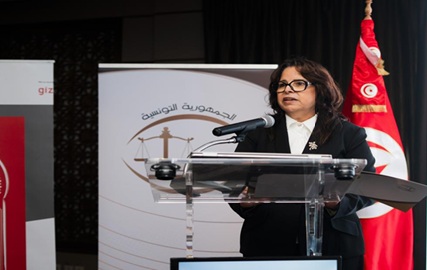
 Republic of Tunisia
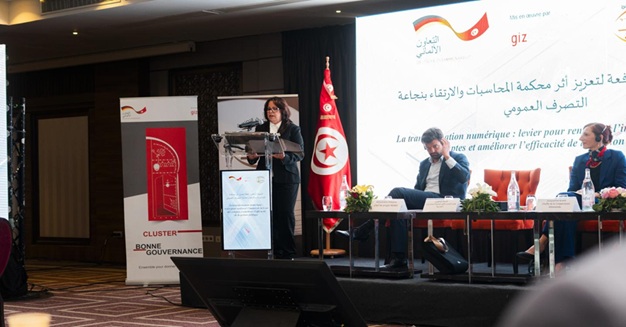
As part of implementing its strategic directions for 2022–2026, which aim to develop audit methods and improve their effectiveness, and as part of strengthening the Court’s engagement with its wider environment, the Court of Accounts, in partnership with the German development cooperation agency, organised a study day on 30 April 2026 at a hotel in the capital under the title:
“Digital transformation: a driver for strengthening the impact of the Court of Accounts and improving the effectiveness of public management for effective oversight and lasting impact.”
The study day aimed to:
- increase the use of digital technology at the various stages of audit work;
- improve mechanisms for monitoring the implementation of recommendations and assessing their impact;
- support decision-making based on data and indicators;
- strengthen transparency and good governance in public management.
The event brought together the Court’s partners and stakeholders, including representatives of the Assembly of the Representatives of the People, the National Council of Regions and Districts, ministries, public institutions and bodies, and the High Committee for Administrative and Financial Control, alongside judges and officials of the Court of Accounts. A delegation from the Libyan Audit Bureau headed by its President, Dr Khaled Shakshak, also attended, reflecting the importance of digital transformation in developing oversight of the management of public funds.
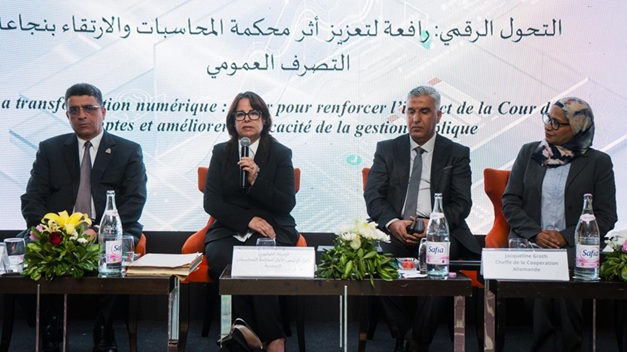
During the study day, a video was presented on the role of digital transformation in developing the Court of Accounts’ working methods. This was followed by an introduction to the “تبّع” platform, developed by the Court as an interactive digital tool with audited entities to monitor the outcome of its work. A video was also shown on the platform’s functions and the indicators and statistics it provides, which help promote transparency and strengthen the effectiveness of oversight of public funds.
The “تثمين” application was also presented as an advanced system supporting financial analysis by providing precise and reliable indicators to improve the quality of audit reports and inform decision-making. A video showed the financial indicators and statistics the application can provide to support timely decisions. A presentation also addressed the Court’s shared database and its role in moving from data collection to achieving impact.
As part of the partnership with peer institutions, a Libyan Audit Bureau delegation headed by its President, Dr Khaled Shakshak, presented the Bureau’s experience of digital transformation and the use of artificial intelligence techniques, strengthening the place of modern technologies in audit work and helping to improve institutional performance.
Discussions during the study day stressed the need to continue investing in digital transformation as a strategic choice to strengthen the Court of Accounts’ impact and consolidate transparency and sound management of public funds. They also emphasised the central importance of the “تبّع” platform in making follow-up of the Court’s work more effective, and the significant role of the “تثمين” application in improving the quality of financial analysis and the use of data to oversee sound management. The final report contained several recommendations, notably:
- accelerate the digitisation of audit workflows;
- develop a comprehensive, integrated information system;
- strengthen integration and data exchange among the various public-sector stakeholders;
- support continuing training and develop the digital skills of the public officials concerned;
- assess the impact of digital tools on the quality and effectiveness of audit work.
Ms Fadhila Gargouri, Deputy to the First President of the Court of Accounts, closed the study day, which demonstrated the Court’s commitment to keeping pace with technological change and strengthening its role in supporting good governance. Mr Khaled Shakshak, President of the Libyan Audit Bureau, was present.