 Republic of Tunisia
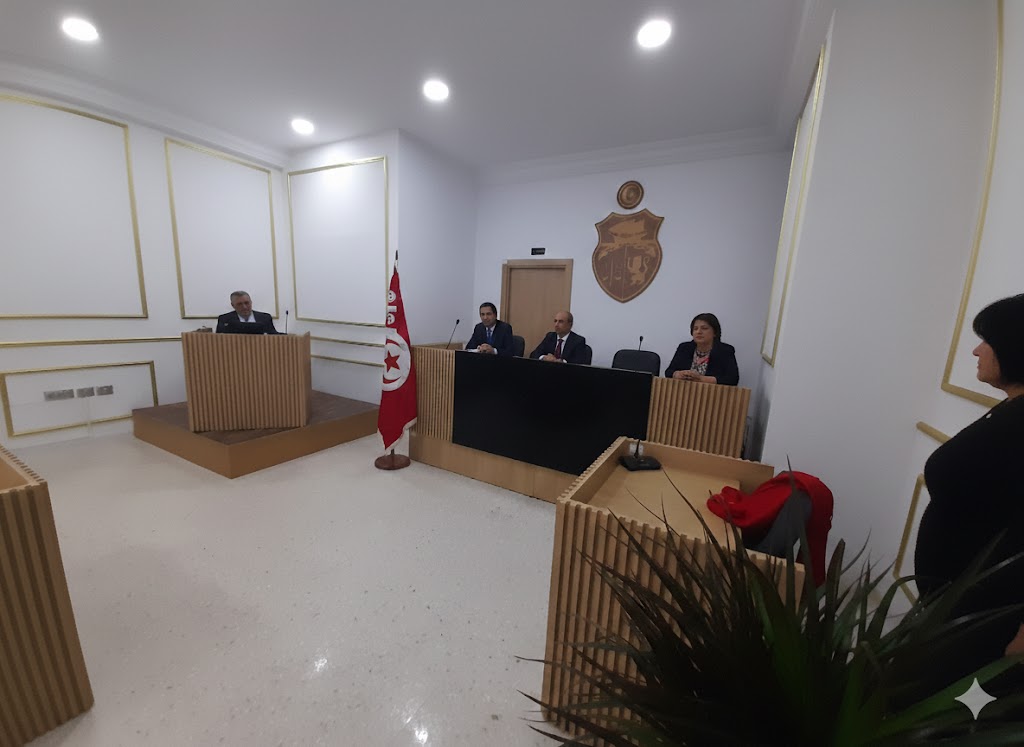
Public hearing
The hearing of oral arguments is public.
The persons concerned are summoned by registered letter with acknowledgment of receipt at least fifteen (15) days before the hearing.
Deliberations are confidential, and judgment is pronounced in a public hearing.
The Public Prosecutor’s Office serves the judgment bearing the enforceable formula on the defendant, the minister responsible for finance, the minister concerned, the person who brought the action and the legal representatives of the bodies concerned, by registered letter with acknowledgment of receipt, within thirty (30) days of its pronouncement.
Sanctions
At the investigation stage:
- If the defendant or witnesses fail to respond to requests from the reporting judge, the Court of Audit may impose a financial penalty of between two hundred (200) dinars and two thousand (2 000) dinars on the defaulting party, on the basis of a report prepared by the judge concerned.
At the judgment stage:
-
- Financial penalty:
Without prejudice to criminal and disciplinary sanctions, any person found responsible for a management error is liable to a financial penalty of between one-twelfth (1/12) and the full amount of the gross annual salary received by that person on the date of the error, excluding family allowances.
Publication of final judgments of conviction on the Court’s website
Final irrevocable judgments of conviction are published on the Court of Audit’s website, in compliance with data-protection legislation.
- Financial penalty:
Appeals
Appeal
- Proceedings to sanction management errors are subject to two levels of jurisdiction.
Judgments of the chamber specialising in sanctions for management errors are delivered at first instance and may be appealed by the defendant or their representative, the Public Prosecutor’s Office, or the persons listed in Article 117 of the aforementioned Organic Law No. 41 of 2019, within two (2) months of notification of the first-instance judgment.The appeal has suspensive effect.
Appeal in cassation
- An appeal in cassation is brought before the cassation formation of the Court of Audit.
The defendant may appeal an appellate judgment in cassation within two (2) months of its notification on the following grounds:· violation of procedural rules;
· violation of the law;
· inadequate or absent reasoning;
· distortion of the facts;
· manifest error.
The Public Prosecutor’s Office may, on the same grounds and within the same deadlines, bring an appeal in cassation of its own motion or at the request of one of the persons listed in Article 117 of the aforementioned Organic Law No. 41 of 2019.
Review
- Final judgments delivered by the Court of Audit concerning sanctions for management errors may be reviewed if new evidence is discovered, within five (5) years of notification of the judgment.
An application for review does not suspend enforcement of the final judgment already delivered.
However, the First President of the Court of Audit may, after hearing the Prosecutor General, order a stay of enforcement. This decision is immediately notified to the parties concerned.